
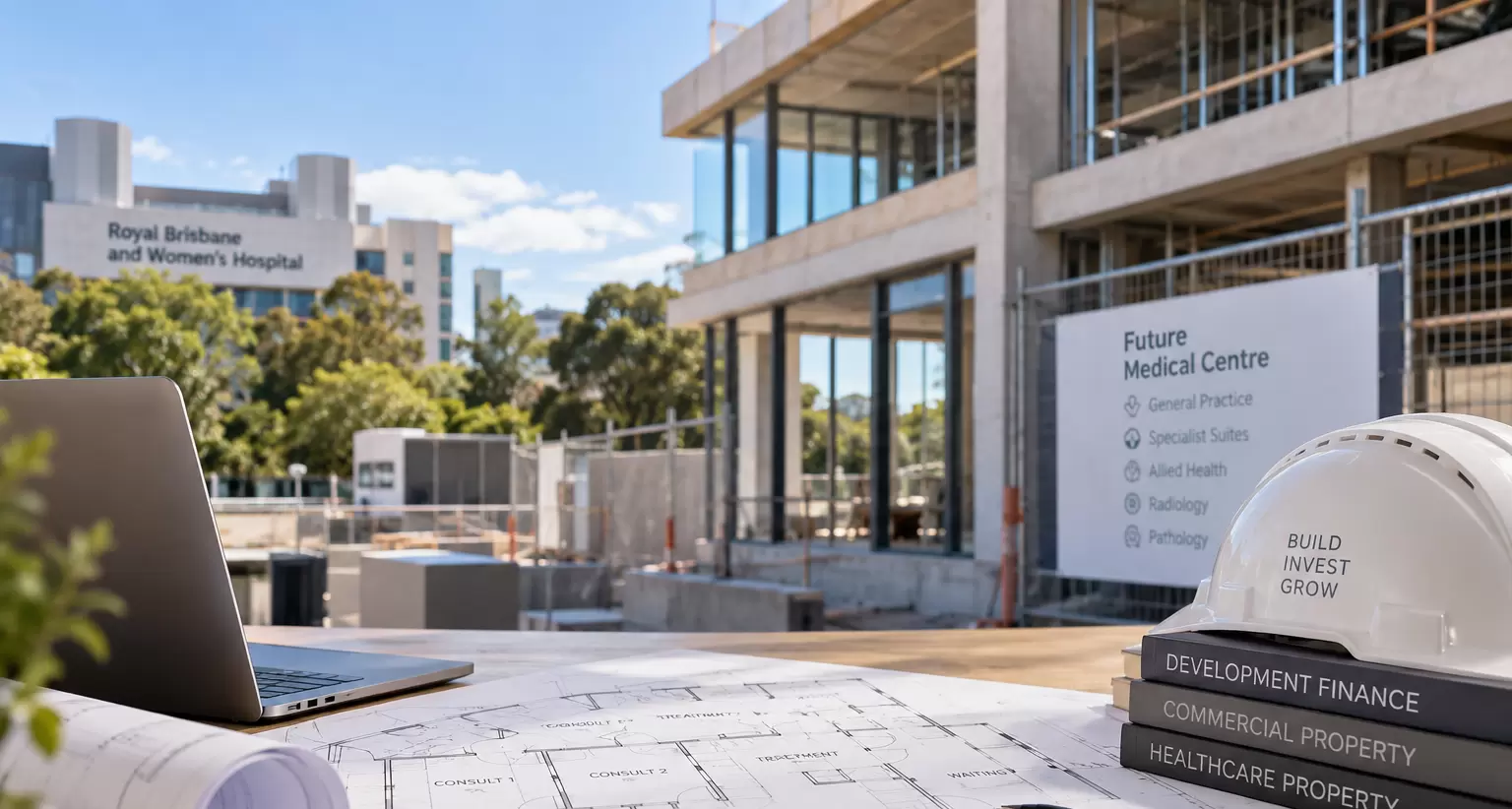
Medical and allied health developments often require specialist funding, particularly when building consulting rooms, dental clinics or purpose-built medical suites. Unlike standard commercial property loans, development finance is structured around construction, with funds generally released as work progresses.
For Herston projects, proximity to the Royal Brisbane and Women's Hospital and the broader health precinct can make the area attractive for healthcare-related premises. However, a strong location is not enough for loan approval. Lenders also examine construction costs, the property's suitability for clinical use, anticipated rental or sale demand and how the development loan will be repaid.
How Progressive Drawdowns Work for Medical Property Developments
Development finance is usually advanced in stages rather than as one upfront payment. Drawdowns are linked to construction progress and commonly require a quantity surveyor's report or other evidence acceptable to the lender.
Consider a developer planning a three-storey medical suites building in Herston, with consulting rooms intended for specialists and allied health practitioners. The developer may arrange land finance first, then seek construction funding once approvals, a building contract and feasibility documents are in place.
Funds may be released as foundations, the structural frame, building services and internal fit-out are completed. The quantity surveyor helps the lender check completed work, spending against budget and whether sufficient funds remain to finish construction.
Interest may be paid during construction or capitalised within the facility, depending on the lender's terms. Capitalised interest needs to be included in the funding budget. Progressive drawdowns can reduce interest costs compared with drawing the full construction amount immediately, although other facility fees may still apply.
What Lenders Assess Before Financing Medical and Allied Health Developments
Lenders evaluate project feasibility, developer experience, construction arrangements, completed value and the intended exit strategy. They may also require evidence of presales or prospective tenants.
For a proposed medical centre, the feasibility should account for land, building costs, professional fees, contingencies, finance costs and the anticipated value or rental return on completion. Healthcare premises can involve additional expenditure on accessibility, plumbing, electrical capacity, specialist services and clinical fit-outs compared with ordinary offices.
The intended ownership structure matters. A development sold as individual medical suites presents different risks from a building retained and leased to healthcare operators. Premises intended for occupation by the developer's own dental or medical practice may also be assessed against that business's trading position.
Lenders generally prefer clearly documented construction costs and an appropriately experienced builder. Fixed-price contracts may reduce uncertainty, whereas cost-plus contracts or complex refurbishments can require additional scrutiny. First-time developers may face different equity requirements from experienced operators.
Ready to get started?
Book a chat with a Finance & Mortgage Broker at Wealthcove today.
How Interest Rates and Finance Costs Work During Construction
Development finance is generally priced differently from lending secured by an established, completed commercial property because the lender faces construction, cost-overrun and completion risks.
Pricing varies by lender and project. Relevant factors include developer experience, leverage, build complexity, pre-leasing commitments and the expected exit. It is therefore better to compare full facility costs than to rely on an indicative interest margin alone.
Interest is commonly charged on the drawn loan balance. If a $3 million facility is approved but only $1.2 million has been advanced, interest would ordinarily apply to that $1.2 million rather than the full approval.
Other costs can include establishment fees, line fees, valuations, quantity surveyor reports and legal expenses. Borrowers should also allow for interest-rate movements and construction delays within the development budget.
Transitioning to Long-Term Medical Property Finance
A development facility is generally short-term funding. When construction finishes, the exit might involve selling completed suites or refinancing into a longer-term commercial loan.
For example, a developer who completes a Herston medical centre and retains it as an investment may seek to refinance the construction debt once the building is completed and leased. The lender will assess the completed valuation, rental income, lease terms, tenant quality and the borrower's capacity to meet repayments.
Where the premises will be occupied by an associated GP, dental or allied health practice, the lender may place greater emphasis on the operating business's financial performance and the proposed property security.
Long-term finance may offer different pricing and loan terms because construction risk has been removed, but approval is not guaranteed. If valuations, sales or leasing fall short of projections, the developer may need to contribute more equity or consider a different lender. Planning this exit before construction begins is important.
Security and Loan-to-Value Ratios for Healthcare Developments
Commercial development lenders commonly consider loan-to-cost and loan-to-value measures. Loan-to-cost compares the proposed facility with the development budget; loan-to-value compares it with the lender's assessment of the completed property's value.
Suppose a Herston medical suites project has a total cost of $4 million and a projected completed value of $5.5 million. The lender will assess both figures, alongside the project's risks, before deciding how much it will advance. There is no single percentage that applies to every lender or development.
The developer will usually contribute equity, either through cash or value already held in the land. Existing land equity may reduce the additional cash required, subject to lender valuation and credit approval.
The lender will generally take a first mortgage over the property and may request guarantees or additional security. During construction, progress inspections help ensure advances remain consistent with completed work and the remaining budget.
Why Medical Presales and Pre-Leasing Commitments Matter
Presales or tenant commitments can demonstrate demand before the project is complete and support the proposed exit strategy.
Where medical suites will be sold separately, signed contracts with doctors, dentists or other practitioners may give lenders greater confidence about repayment from settlement proceeds. For a centre retained as an investment, leases with medical and allied health operators can support forecasts of rental income and the completed property's value.
Lenders examine more than the percentage sold or leased. They consider the financial strength of tenants, lease terms, incentives, conditions attached to agreements and likely timing of occupation.
A development with credible healthcare occupants may present a stronger case than an otherwise similar speculative project. However, requirements vary between lenders and no particular level of presales or pre-leasing guarantees approval.
Working with a Medical Development Finance Broker in Herston
Medical and allied health developments can involve costs beyond the building itself. A practice may also need funding for clinical equipment, specialist fit-out and working capital, which may not all qualify for the construction facility.
A broker familiar with commercial development finance can compare lender appetite, equity requirements, drawdown arrangements, fees, construction conditions and long-term refinancing options.
For a project near Herston's hospital precinct, the key is matching funding to whether the development will be sold, leased to healthcare tenants or occupied by the borrower's own practice. Considering construction finance and the exit strategy together can help reduce funding problems at completion.
Ready to Review Your Medical Development Finance Options?
Whether you're constructing medical suites, developing an allied health centre or expanding premises for your practice, Wealthcove can compare commercial finance options across banks and specialist lenders.
If you're based in Herston or nearby, Liam can meet you at your workplace, home or a local café, or arrange a phone or video appointment. Learn more about our Herston mortgage and finance broker or book an appointment. You can also call Liam directly on 0452 646 192 to discuss your project.